

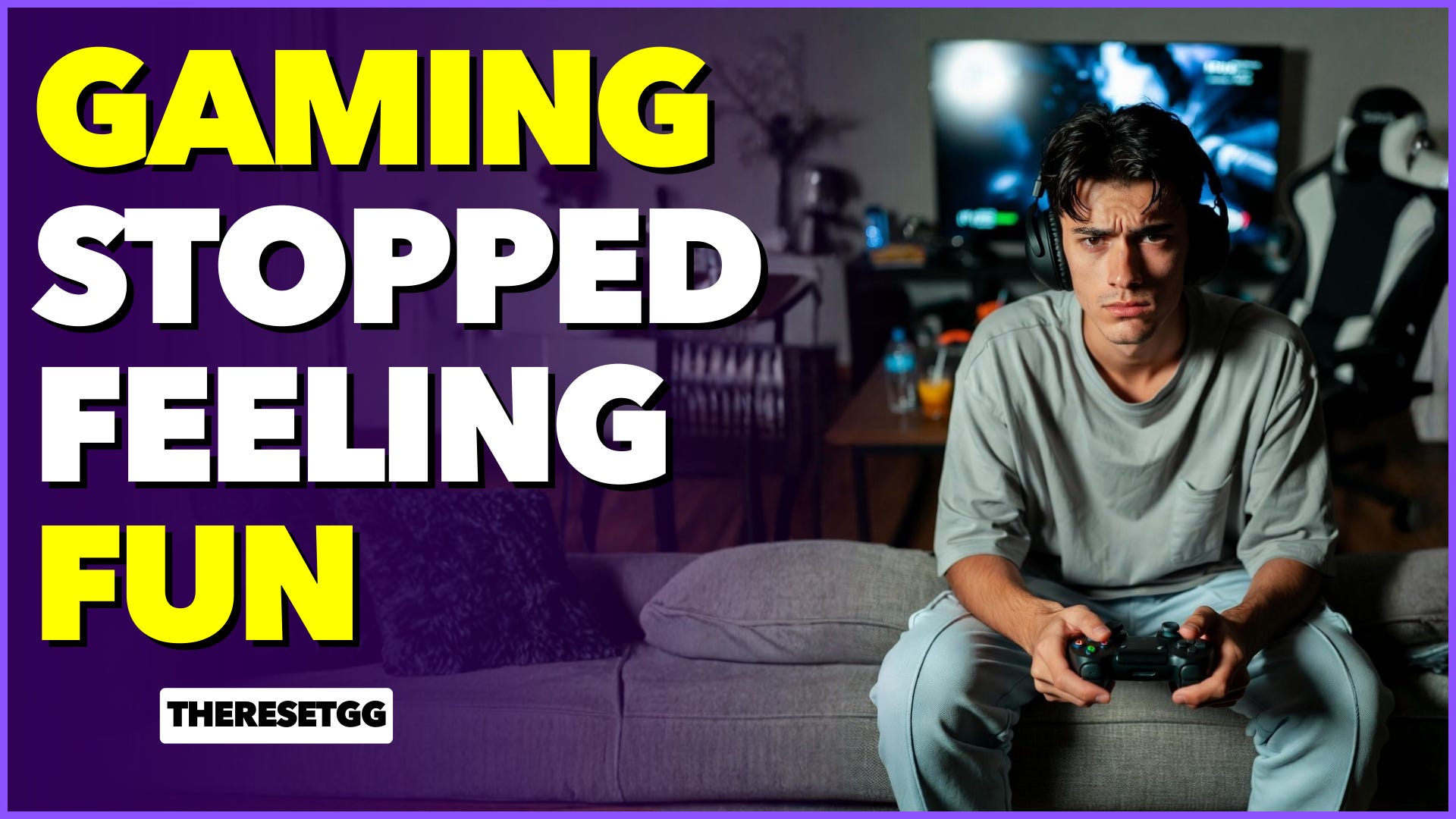
There was a stretch of time where gaming just stopped working for me. I still wanted to play. I would sit down at night, scroll through my library, even boot something up. But within minutes, everything felt flat. Games I used to love couldn’t hold me, and I kept asking myself the same uncomfortable question: what is wrong with me?
My first assumption was burnout. Work was heavy, life was busy, and that explanation made sense. Burnout is common, especially for people trying to balance ambition, family, and creative work. But it turned out that wasn’t the whole story.
Gaming wasn’t broken, and I wasn’t broken either. What was broken was my ability to rest.
Gaming isn’t broken. Sometimes your nervous system just never gets a chance to power down.
How I Accidentally Trained My Brain to Stay “On”
For years, I had trained myself to stay in a constant state of stimulation. When I was streaming daily while holding a full-time job, I needed energy on demand. Long streams, constant engagement, and always being “on” became the norm. To keep up, I leaned on pre-workout drinks. At first it was just before workouts. Then before streams. Then during streams. Eventually it became part of everything.
When I moved into a work-from-home role, that pattern followed me. I switched to 5-hour Energy, and what had once been an occasional boost became a habit. I needed one before work, after meetings, before starting a task, before recording a video, and before working out. My baseline kept rising, and I didn’t notice it happening.
Why Gaming Couldn’t Relax Me Anymore
At night, when I wanted to relax and play games, my nervous system didn’t know how to come down. Gaming couldn’t do what it used to do. It couldn’t absorb me or calm me because my brain never left high-alert mode. Everything felt dull, not because gaming lost its value, but because constant stimulation had flattened my sense of enjoyment.
That’s the part people rarely talk about. When your brain is overstimulated, normal pleasures stop registering. You still want to play, but nothing satisfies. It’s not a loss of interest. It’s a loss of contrast.
Fun needs contrast. When everything is intense, nothing feels rewarding.
The Reset I Didn’t Expect
Eventually, I had to face the truth. Caffeine wasn’t helping me anymore. It had become a dependency, and it was clearly affecting my health. I tried cutting back, but I never fully stopped, so I finally quit cold turkey. The first few days were rough. Headaches, fatigue, mental fog. But I stayed with it.
And slowly, something unexpected happened.
Gaming came back.
I started looking forward to playing again. Games felt engaging. I could play for a bit and leave feeling relaxed instead of restless. Even outside of gaming, other parts of life started to feel better. Focus improved. Enjoyment returned. I had space again.
What This Changed for Me
That’s when it clicked. This wasn’t burnout from gaming. It was dopamine overload from constant stimulation. When your brain is pushed all day long, nothing feels special. When stimulation drops, contrast returns, and with contrast, joy comes back online.
If gaming feels dull or empty right now, it doesn’t automatically mean you’ve outgrown it. It might mean your life never gives your nervous system a chance to settle. Constant stimulation kills recovery, and recovery is what makes play feel good.
Sometimes the reset isn’t a new game. It’s less noise.
If this felt familiar, you’re not broken. You might just be overstimulated. I’m going to share what helped me rebuild contrast and enjoyment next week.
The thing I have to work at is getting more rest. Paradoxically, I’m always worried about trying to come up with creative thoughts to write about video games, but I'll be too tired to actually write about it (if the idea comes at all).
I have this constant feeling like I'm always behind everyone else who posts great write-ups weekly or thereabout. For me, the planets have to align in order to have the time and opportunity to both play AND write consistently (which rarely happens).
But I have found that I am most content when I prioritize rest and just going at whatever pace I actually sustain. It's a hobby, not a job.
That turns into worrying that I’ll never really soar in writing about a subject I'm very familiar with, but just don't have the mental capacity, time, and energy to articulate in a way that is meaningful.
Great article. I’m launching a gaming publication that will explore many of the deeper layers behind this.
https://kingdomcodegaming.substack.com/